

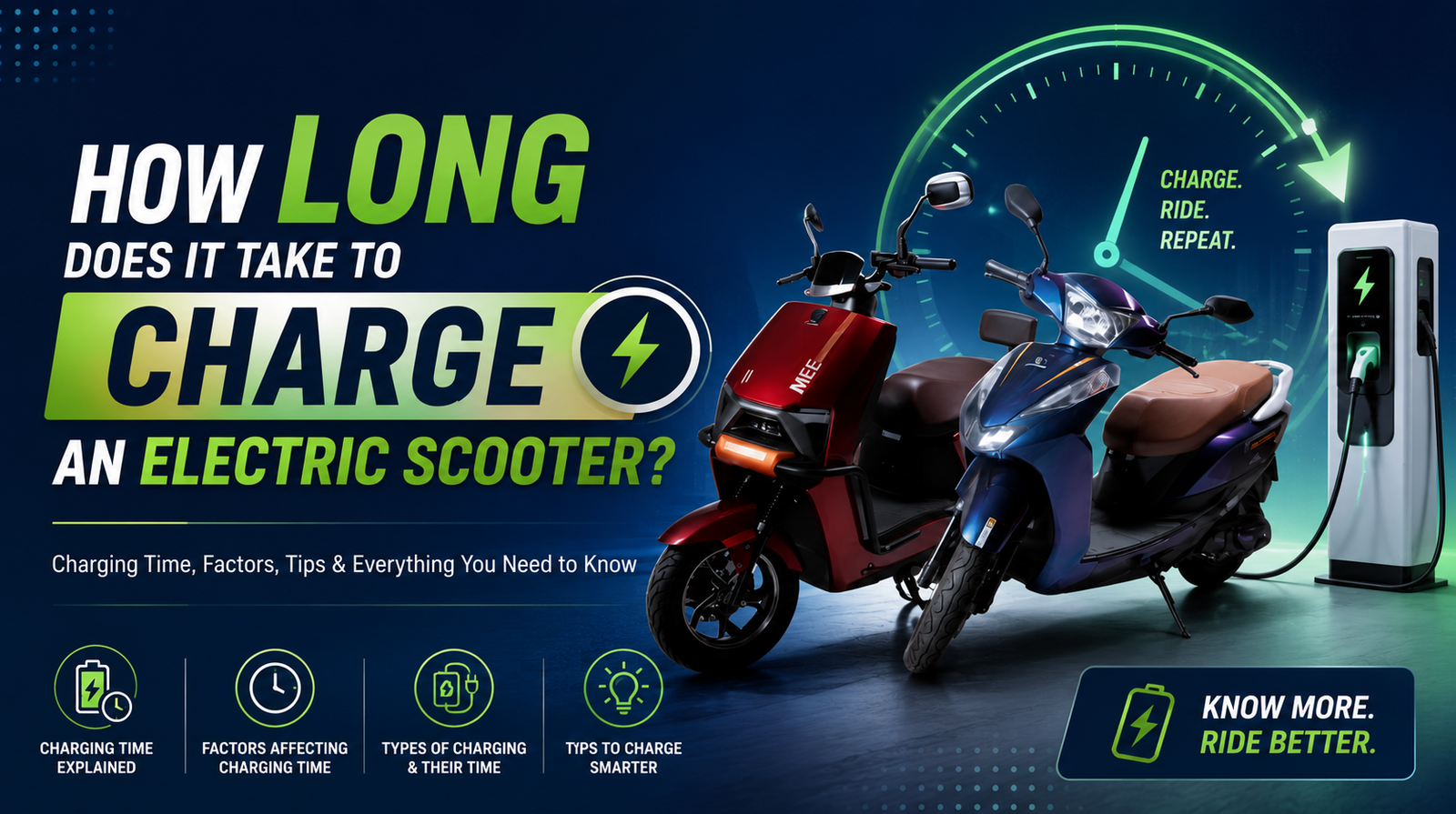
Ask anyone shopping for their first electric scooter and this is usually the first question: “How long until it’s actually ready to ride?” It’s a fair worry — nobody wants to plan their commute around a battery. The good news: for most riders, charging turns into a non-event. Plug in at night, unplug in the morning, done. The actual time depends on three things — your battery’s capacity, the charger it ships with, and how low the battery was when you plugged it in. Here’s the real breakdown, plus how Buzzride compares, and a few habits that’ll keep your battery performing well for years, not just months.
Quick Answer
Across the industry, most electric scooters take 4 to 8 hours to charge fully from a low battery, depending on battery size and charger output. Buzzride scooters charge in just 4–5 hours on a standard household 3-pin plug — on the faster end of that range — with actual time varying slightly based on conditions and battery state.
Charging Time by Scooter Type
| Scooter Type | Typical Battery Capacity | Average Charge Time |
|---|---|---|
| Entry-level / lightweight commuter | Under 300Wh (~10Ah) | 3–5 hours |
| Buzzride (lead-acid or lithium models) | 48V–72V, 3–6Ah | 4–5 hours |
| Long-range / high-performance | 600Wh+ (15Ah+) | 8–12+ hours |
Buzzride charging time may vary based on conditions and battery state. Figures for other categories are general industry estimates based on standard manufacturer chargers.
One Scooter, Two Battery Options
Buzzride models are compatible with both lead-acid and lithium battery configurations, depending on the model — including 48V–72V lead-acid packs and 54.6V–71.2V lithium packs. Both charge via the same simple 3-pin plug, so switching between battery types doesn’t mean switching how you charge. Lithium batteries generally offer lighter weight and longer cycle life, while lead-acid remains a cost-effective, reliable option — Buzzride supports both so riders can choose what fits their budget and needs.
Factors That Affect Charging Time
Several variables determine exactly how long your scooter takes to reach 100%:
- Battery capacity (Wh or Ah) — larger batteries store more energy and simply need more time to fill.
- Charger output (watts/amps) — a higher-wattage charger delivers energy faster.
- Remaining battery level — charging from 20% takes longer than topping up from 70%.
- Battery temperature — very hot or cold batteries charge more slowly and less efficiently.
- Charging conditions — ambient temperature and a stable power source both matter.
As a rule of thumb: the bigger the battery, the longer the charge — much like filling a larger fuel tank takes more time than a smaller one.
Tips for Efficient, Safe Charging
Get the most life and performance out of your battery with these habits:
- Use only the charger recommended by the manufacturer. Third-party or mismatched chargers can damage the battery or void your warranty.
- Charge in a cool, dry location — ideally around 20–25°C (68–77°F).
- Let the battery cool before charging if you’ve just finished a long or hard ride.
- Keep the charging port clean and dry to avoid corrosion or connection issues.
- Unplug once charging is complete, if your manufacturer’s instructions recommend it — this avoids unnecessary heat buildup from prolonged trickle charging.
- Avoid letting the battery sit fully depleted for long periods. If storing your scooter for a while, aim for a 40–60% charge.
Charging at Home Beats the Petrol Station Run
Anyone who’s circled a block looking for a petrol pump during peak hours knows the appeal here: your scooter charges wherever you already are. No queue, no waiting for the attendant, no trip that eats into your morning. With Buzzride, that means connecting the scooter’s 3-pin plug to any household socket — the same kind powering your phone charger or table fan. Plug it in when you get home, and in as little as 4–5 hours you’re topped up. For most riders that’s simply overnight, but it’s just as workable during a lunch break or while you’re at your desk during a workday.
The Buzzride Difference
No special charging stations, no adapters to buy, no apps to configure — just a plug and a socket you probably already have near your front door. That’s the whole system, and it’s built to disappear into a routine you barely think about.
Frequently Asked Questions
Can I overcharge my electric scooter? Most modern scooters, including Buzzride models, have built-in protection to stop charging once the battery is full. Even so, it’s good practice to unplug once charging is complete rather than leaving it connected for extended periods.
Is it OK to charge my scooter every day? Yes, for both battery types Buzzride uses. Lithium-ion batteries don’t have a “memory effect,” so daily top-ups are fine and often better than repeatedly running the battery to empty. Lead-acid batteries handle daily charging well too, though they generally prefer not to sit fully depleted for long stretches.
Why is my scooter taking longer to charge than usual? This is often caused by cold temperatures, a partially depleted charger cable, or charging immediately after a long ride while the battery is still warm. Let the battery cool and try charging in a room-temperature space.
Does fast charging damage the battery? Fast charging isn’t inherently harmful occasionally, but relying on it daily can generate extra heat and may reduce battery lifespan over time. Standard charging is generally better for long-term battery health.
Final Thoughts
Charging an electric scooter is easy, affordable, and fits naturally into your daily routine. With the right charger, good habits, and a bit of care around temperature and timing, you can expect reliable, consistent performance — and with Buzzride’s simple household-socket charging, your scooter will always be ready when you are.



Add comment