

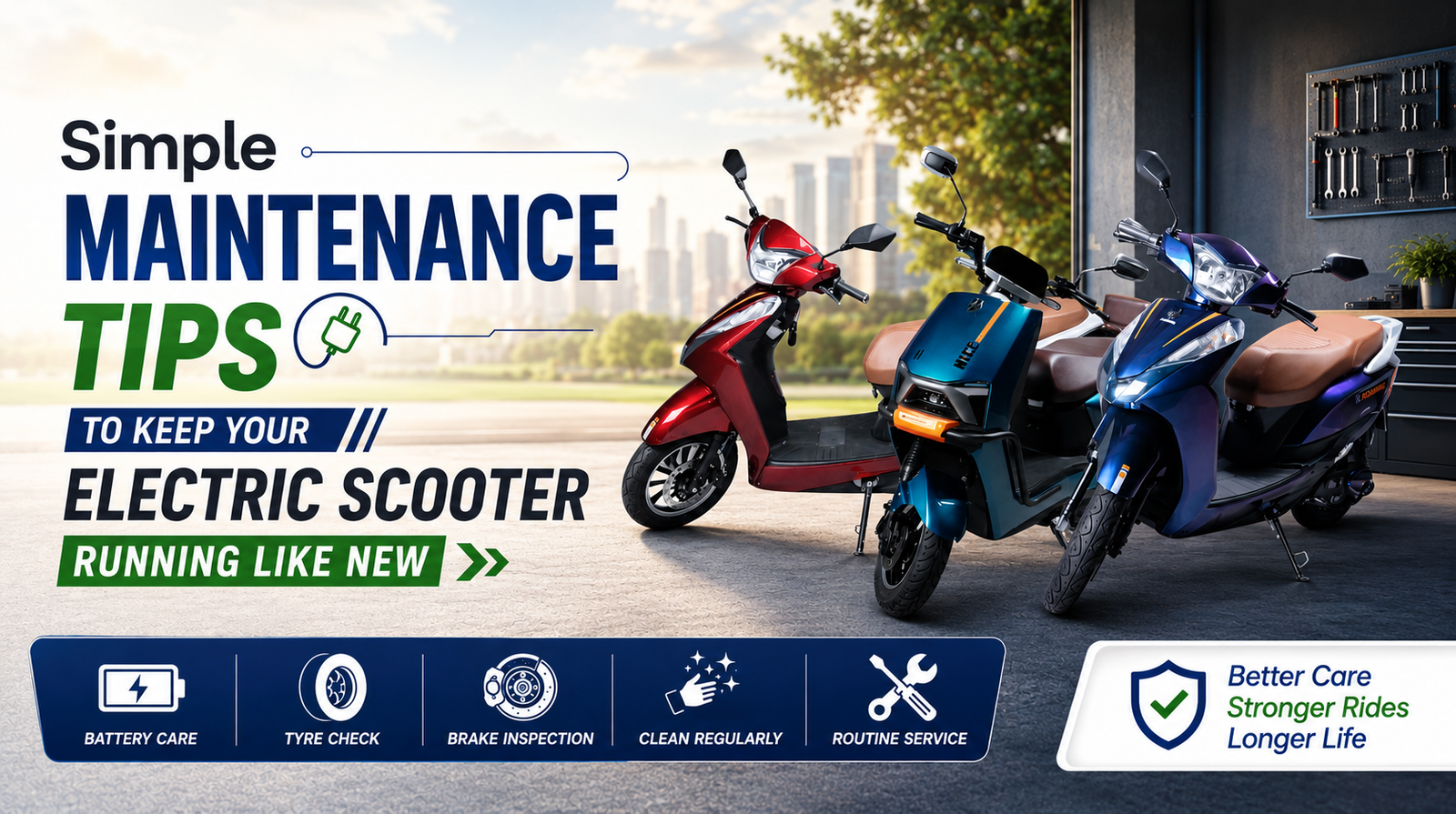
Most people worry about scooter maintenance because they’re picturing what a petrol scooter demands — oil changes, spark plugs, a fuel system to keep tuned. An electric scooter sidesteps almost all of that. But “less maintenance” isn’t the same as “no maintenance,” and the handful of habits below are what actually separate a scooter that’s still riding smoothly in year three from one that isn’t.
1. Keep Your Scooter Clean — But Skip the Hose
A soft, slightly damp cloth handles dust, mud, and everyday grime just fine, especially around the wheels and undercarriage where it collects fastest. The instinct to hose it down like a car is where most damage actually starts: water under pressure finds its way past seals that were only ever rated for splashes, not a direct spray. If you’ve ridden through mud or rain, a wipe-down when you get home prevents far more buildup than an occasional deep clean.
2. Check Tyre Pressure
Correct tyre pressure isn’t just about a smoother ride — it directly affects handling, braking distance, and battery efficiency. Even a 10–15% drop in pressure noticeably increases rolling resistance, which means the motor works harder and drains the battery faster to cover the same distance. Check pressure at least once every couple of weeks, or before longer rides, using your scooter’s recommended PSI (usually printed near the tyre or in the manual).
3. Inspect the Brakes
Responsive brakes are non-negotiable for rider safety. If braking feels weak, delayed, or produces unusual noise, don’t wait — have them inspected and adjusted promptly. A quick monthly brake check takes seconds and can prevent a much more serious problem down the road.
4. Keep the Charging Port
Dry Always make sure the charging port is clean, dry, and free of debris before plugging in the charger. Charging with a wet or dirty port risks corrosion and poor connections over time, which can affect both charging speed and battery health.
5. Charge Responsibly
Use only the original manufacturer’s charger — third-party chargers can deliver incorrect voltage or current and damage the battery. Avoid charging immediately after a long, hot ride (let the battery cool first), and keep the battery away from extreme heat, direct sunlight, or damp conditions while charging.
6. Check Lights and Indicators
Functional headlights, taillights, and indicators are essential for visibility and safety, particularly during early morning or evening commutes. Test them regularly and replace any dim or non-functioning bulbs immediately — this is one of the quickest checks with the biggest safety payoff.
7. Store Your Scooter Properly
When not in use, park your scooter indoors or under cover to protect it from rain, direct sun, and temperature extremes — all of which can accelerate wear on the battery, electronics, and tyres. If you won’t be riding for an extended period, store the battery at a partial charge (roughly 40–60%) rather than fully depleted or fully charged.
8. Schedule Regular Inspections
Even though electric scooters need less upkeep than petrol vehicles, periodic inspections — checking bolts, cables, suspension, and the battery housing — help catch minor issues before they become costly repairs. A quick once-over every month or two is usually enough for typical daily use.
What This Looks Like on a Buzzride
None of the above requires tools, a service centre, or technical know-how — a Buzzride is built around a 3-pin plug, standard tyres, and a simple brake system, so the checks above genuinely take a few minutes rather than being a euphemism for “send it to a mechanic.”
Frequently Asked Questions
How often should I maintain my electric scooter? Quick checks — tyre pressure, brakes, cleanliness — are worth doing every couple of weeks. A more thorough inspection every month or two is usually enough for typical daily commuting use.
Can I wash my electric scooter with water? Light wiping with a soft, damp cloth is fine for the frame and deck. Avoid hosing or high-pressure water near the charging port, battery compartment, or any electrical connectors.
Is it bad to leave my electric scooter charging overnight? Most modern scooters, including Buzzride models, have built-in protection that stops charging once the battery is full, making overnight charging safe and convenient for most riders. Still, unplugging once fully charged is good practice where the manufacturer recommends it.
Final Thoughts
None of this adds up to much time — a tyre check here, a wipe-down there, a brake test once a month. What it adds up to is a scooter that still feels new well past the point most people expect it to start slipping, and a battery that lasts as long as it’s actually capable of.





Add comment