

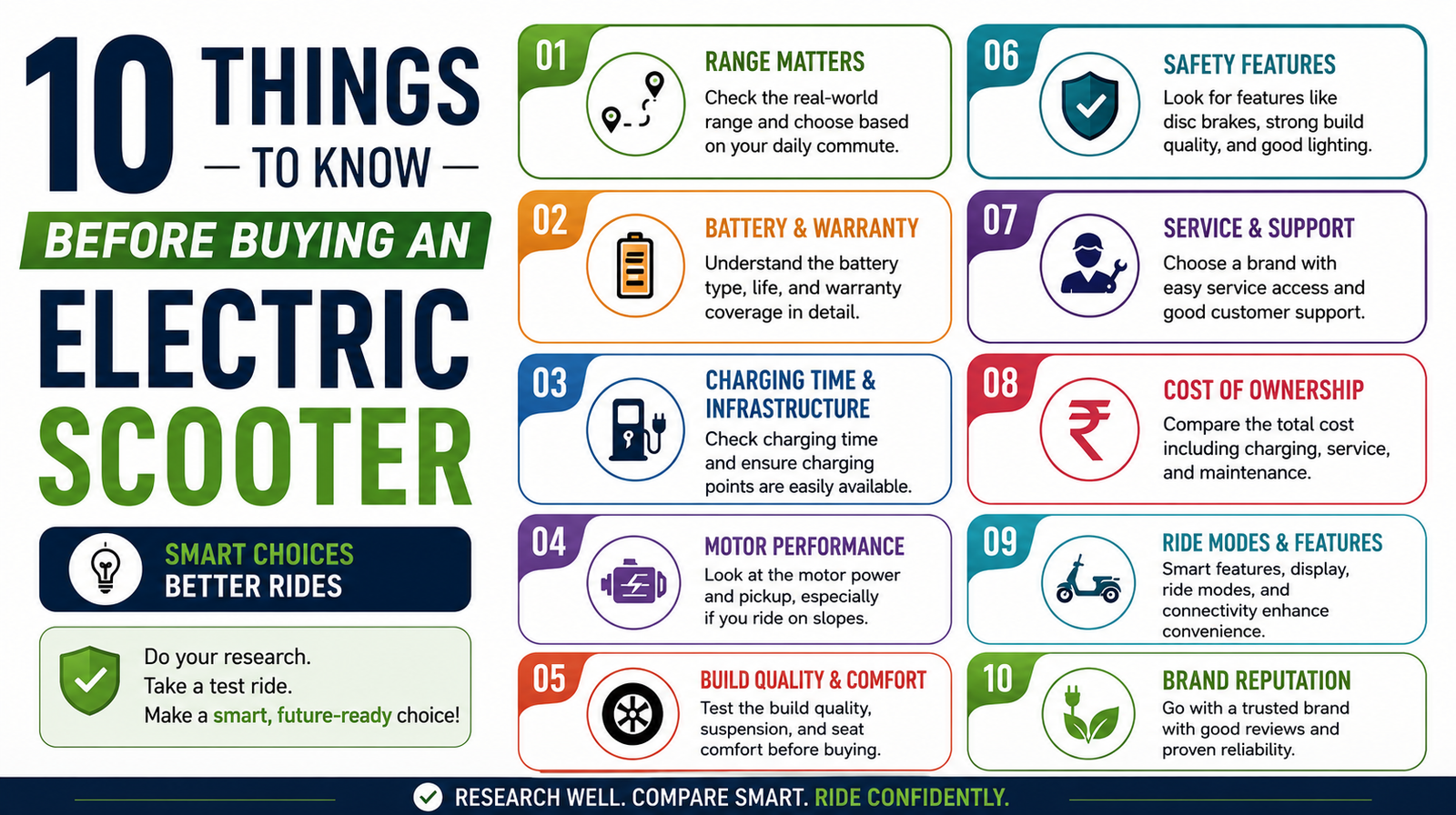
Every city has more electric scooters on its roads than it did two years ago, and the reasons are practical rather than trendy: petrol keeps getting pricier, servicing an electric scooter costs a fraction of a petrol one, and charging happens at home instead of at a pump. That doesn’t mean any scooter will do, though. Buying one is worth treating as a decision, not an impulse purchase based on color or price tag alone — the right scooter for a five kilometre city commute looks different from the right one for a longer, hillier route. Here are ten things worth thinking through first.
1. Know Your Daily Travel Distance
Before choosing a scooter, calculate roughly how many kilometres you travel each day. Ask yourself:
- How far is your office or college?
- Do you mostly ride within the city, or do you need longer range for occasional trips?
- Will you use the scooter every day, or only occasionally?
Choosing a scooter with a riding range comfortably above your typical daily distance helps avoid unnecessary top-up charging and gives you real peace of mind — especially on days with unplanned detours.
2. Understand the Battery
The battery is one of the most important parts of any electric scooter, and it’s worth understanding your options. Two main battery types are used in electric scooters today:
- Lithium-ion — lighter weight, efficient charging, and typically a longer service life.
- Lead-acid — a more budget-friendly, reliable option, often used in entry-level and mid range models.
Buzzride offers models with both battery types, so you can choose based on your budget and priorities. Whichever type your scooter uses, good habits extend battery life:
- Avoid completely draining the battery regularly.
- Use the manufacturer-recommended charger.
- Charge in a cool, dry place.
- Follow the manufacturer’s specific charging guidelines.
3. Check Charging Convenience
One of the biggest advantages of owning an electric scooter is charging it at home. Instead of visiting a petrol station, most electric scooters — including all Buzzride models — charge using a standard household 3-pin socket, typically taking 4–8 hours depending on the scooter and battery (Buzzride scooters charge in as little as 4–5 hours).
If you have access to a socket at home or at work, owning an electric scooter becomes even more convenient — plug in overnight and start your day with a full charge.
4. Consider Running Costs
The purchase price is only one part of the ownership experience. Electric scooters generally cost far less to run than petrol scooters, since electricity costs a fraction of fuel per kilometre. Fewer moving parts also mean lower servicing and maintenance expenses over the scooter’s lifetime.
Looking at total cost of ownership — not just the sticker price — often gives a much clearer picture of value.
5. Comfort Is Important
If you’re riding every day, comfort matters as much as specs. Look for:
- Comfortable seating
- A spacious footboard
- Practical storage
- Stable handling
- Easy manoeuvrability in traffic
A comfortable scooter makes daily commuting genuinely enjoyable rather than something you tolerate.
6. Look for Practical Features
Prioritise features that improve everyday riding rather than chasing tech for its own sake. Useful additions include:
- Digital instrument display
- LED lighting
- Convenient under-seat or handlebar storage
- Easy home charging
- A comfortable, upright riding position
Practical features like these make a noticeable difference in daily use — far more than specs you’ll rarely think about after the first week.
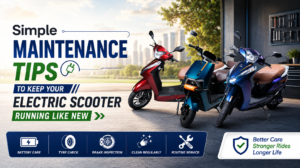
7. Maintenance Requirements
There’s no engine to service, which cuts out a whole category of upkeep a petrol scooter demands — but “less maintenance” still means “some maintenance.” Before buying, ask what routine servicing actually involves for the model you’re considering, and whether checking these takes five minutes or requires a workshop visit:
- Tyres
- Brakes
- Lights
- Suspension
- Charging port
A quick routine check every few weeks helps ensure safe, reliable performance and catches small issues before they become costly repairs.
8. Safety Comes First
Safety should always be a priority when choosing a scooter. Look for:
- Reliable braking performance
- Good tyre grip
- Bright, functional lighting
- Strong build quality
And regardless of the scooter you choose, always wear a certified helmet and follow local traffic regulations.
9. Think Beyond the Purchase Price
A lower purchase price doesn’t always mean lower ownership costs. Factor in:
- Electricity expenses
- Maintenance and servicing costs
- Long-term reliability
- Everyday convenience
Calculating total cost of ownership — not just upfront price — leads to a smarter buying decision.
10. Choose a Brand You Can Trust
The vehicle is only half of what you’re buying. The other half is whether the company answers the phone when something goes wrong three months in, whether spare parts are actually available, and whether the warranty means anything in practice. A cheaper scooter from a brand with no local service network can end up costing more than a slightly pricier one that’s actually supported.
Why Buzzride Is Designed for Everyday Commuting
At Buzzride, we believe commuting should be simple, comfortable, and economical. Our electric scooters are designed for everyday Indian roads, combining practical features with dependable performance.
Why riders choose Buzzride:
- Convenient charging in 4–5 hours using a standard 3-pin household socket
- Choice of lead-acid or lithium battery models to suit different budgets
- Spacious storage for daily essentials
- Comfortable seating for everyday commuting
- Low running and maintenance costs
- Practical design built for city riding
Whether you’re travelling to work, attending college, or running daily errands, Buzzride is designed to make every journey easier and more enjoyable.
Frequently Asked Questions
How do I choose the right electric scooter range for my needs? Track your typical daily commute distance for a week, then choose a scooter with a range comfortably above that figure to account for detours, traffic, or occasional longer trips.
Is lithium or lead-acid better for an electric scooter battery? Lithium batteries are lighter and typically last longer, while lead-acid batteries are more budget-friendly and still reliable. The right choice depends on your budget and priorities — Buzzride offers both.
Do electric scooters need a home charging point installed? No — most electric scooters, including Buzzride models, charge through a standard household 3-pin socket. No special charging infrastructure is required.
Final Thoughts
None of these ten factors matter equally for every rider — someone commuting three kilometres in flat city traffic has different priorities than someone covering a longer, hillier route. What matters is going through them deliberately instead of choosing on looks or price alone, since the gap between a scooter that fits your actual routine and one that doesn’t shows up in the first month, not the tenth.
If you’re looking for an electric scooter built specifically around everyday Indian roads and commuting patterns, Buzzride is worth a look



Add comment