

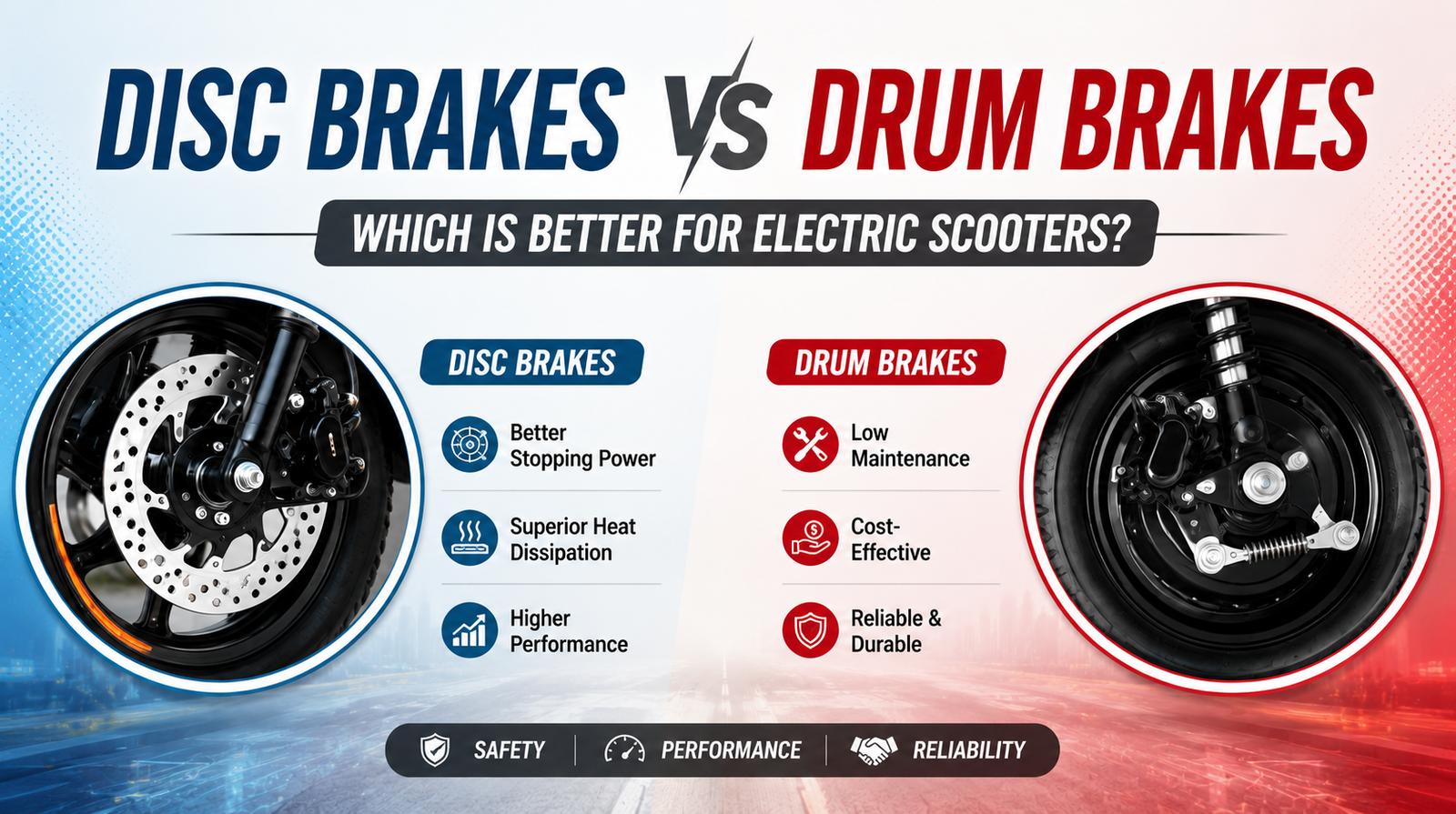
When shopping for an electric scooter, most riders zero in on range, battery capacity, and charging time. But one component quietly decides how confident you’ll feel every time you brake in traffic: the braking system. Electric scooters typically come with one of two brake types — disc brakes or drum brakes. Here’s how each one works, where it excels, and how to decide which suits your riding style.
What Are Disc Brakes on an Electric Scooter?
A disc brake uses a metal rotor mounted to the wheel hub. When you squeeze the brake lever, a caliper clamps down on the rotor from both sides, converting speed into heat almost instantly.
Strengths of disc brakes:
- Stronger stopping power, particularly at higher speeds
- More consistent performance in rain or wet roads
- Faster heat dissipation, which limits brake fade during repeated stops
- Sharper braking feel with more precise control
- Wear is easy to spot with a quick visual check
Trade-offs:
- Higher cost than drum setups
- Brake pads tend to wear faster and need replacing sooner
- Performs best with routine upkeep
What Are Drum Brakes on an Electric Scooter?
A drum brake works differently: curved brake shoes press outward against the inner wall of a rotating drum fixed to the wheel. It’s an older, proven design still widely used because it’s tough and inexpensive to produce.
Strengths of drum brakes:
- Lower maintenance needs overall
- Enclosed design keeps dust and road grit out
- Brake shoes typically last longer under normal use
- Cheaper to manufacture, which often means a lower scooter price
Trade-offs:
- Dissipates heat less efficiently
- Stopping power can taper off during hard, repeated braking
- Generally weaker outright stopping power than disc brakes
Disc Brakes vs Drum Brakes: Quick Comparison
| Feature | Disc Brakes | Drum Brakes |
|---|---|---|
| Stopping power | Excellent | Good |
| Wet-weather performance | Excellent | Good |
| Heat dissipation | Excellent | Average |
| Maintenance needs | Moderate | Low |
| Upfront cost | Higher | Lower |
| Everyday city riding | Excellent | Good |
Which Brake Type Suits City Commuting Better?
If most of your riding happens in dense traffic — frequent stop-and-go, sudden braking for pedestrians or vehicles cutting in — disc brakes generally give you a safety margin. They bite faster, stay consistent in the rain, and hold up better under repeated hard stops.
Drum brakes are still a solid, dependable choice for everyday commuting, especially if you’d rather trade a bit of outright stopping power for lower running costs and less frequent servicing.
Many electric scooters also pair either brake type with a Combined Braking System (CBS), which links the front and rear brakes so both engage together when you squeeze one lever. CBS shortens stopping distances and reduces the risk of wheel lock-up — and it matters just as much for daily safety as the disc-vs-drum choice itself.
Is One Braking System Actually Safer?
Both disc and drum brakes are safe when properly maintained. What affects safety more than the brake type is:
- Getting brakes serviced on schedule
- Maintaining correct tyre pressure
- Replacing worn pads or shoes before they fail
- Riding habits — anticipating stops instead of relying on hard last-second braking
A scooter with disc brakes and neglected maintenance is riskier than a well-maintained drum-brake scooter. Hardware helps, but upkeep does the heavy lifting.
Beyond Brakes: What Else to Check Before You Buy
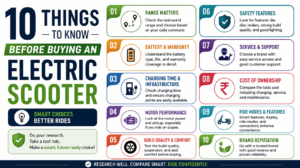
Brakes are one piece of the puzzle. Before finalising an electric scooter, also weigh:
- Real-world riding range
- Charging convenience
- Battery quality and warranty
- Ride comfort and seat quality
- Storage space
- Service network and support
- Overall warranty coverage
- A well-rounded electric scooter pairs reliable braking with comfort, efficiency, and dependable day-to-day performance.
Buzzride: Braking Options Across the Range
Every Buzzride scooter comes with a front disc brake as standard — so you always get strong, responsive stopping power where it matters most. From there, the rear brake varies by model:
- Front Disc / Rear Disc — VB15, Rooney, and Rooney Pro pair disc brakes on both wheels for maximum stopping power and control, ideal for riders who want the strongest possible braking in heavy traffic or wet conditions.
- Front Disc / Rear Drum — Nemo 117 and Glitzy combine a responsive front disc brake with a low-maintenance rear drum, balancing strong front-end stopping power with lower running costs.
Every Buzzride scooter goes through the same testing standards for reliable everyday performance on Indian roads, regardless of which combination you choose.
Final Thoughts
There’s no universal winner between disc and drum brakes — the right choice depends on how you ride. Disc brakes offer stronger, more consistent stopping power and suit riders who want maximum control in city traffic or wet weather. Drum brakes remain a practical, low-maintenance option for everyday commuting. Whichever system you choose, regular maintenance and attentive riding habits matter just as much as the hardware. Match the brake type to your commute, keep up with servicing, and you’ll ride with confidence either way.
Want to compare disc and drum brake models side by side?
FAQs
Do disc brakes wear out faster than drum brakes? Generally yes — disc brake pads see more direct friction and typically need replacement sooner than drum brake shoes, though both last longer with regular maintenance.
Are drum brakes unsafe for electric scooters? No. Drum brakes are safe and reliable when properly serviced; they simply offer less outright stopping power than disc brakes, especially during repeated hard braking.
What is CBS on an electric scooter? CBS (Combined Braking System) links the front and rear brakes so both activate when you squeeze either lever, shortening stopping distance and reducing lock-up risk — independent of whether the scooter uses disc or drum brakes.


Add comment