

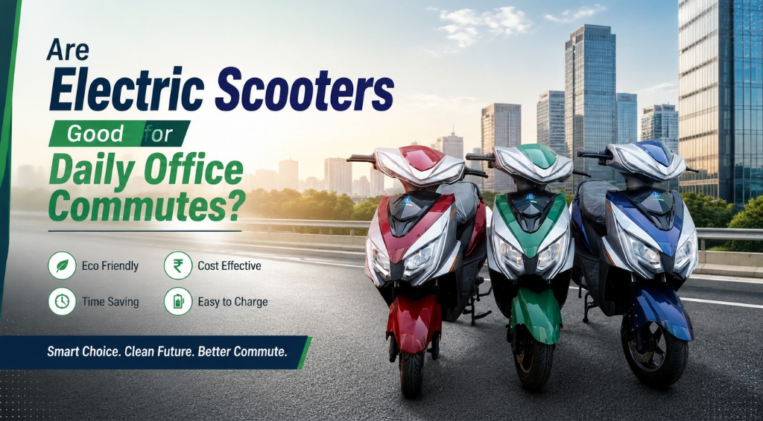
Commuting is a daily reality for most working people. Whether you’re heading to the office, college, or client meetings across town, your choice of vehicle shapes your time, your monthly budget, and how stressful — or stress-free — your day starts.
With fuel prices climbing and city traffic only getting worse, electric scooters have moved from niche to mainstream as a daily-commute option. But do they actually hold up for the office grind, day after day? Here’s a closer look.
Why City Commuters Are Switching to Electric Scooters
Office commutes are usually short-to-medium trips through stop-and-go traffic and frequent signals — exactly the conditions electric scooters are built for. Smooth acceleration, near-silent operation, and low running costs make them well suited to the daily grind of city travel.
Lower Cost Per Day, Lower Cost Per Year
The biggest draw of an electric scooter is what it doesn’t cost you. There’s no exposure to fluctuating fuel prices — charging costs a fraction of what a tank of petrol does.
For someone commuting five or six days a week, that difference compounds fast. Over a year, the savings on fuel alone can be substantial, even before factoring in lower maintenance.
Charging at Home, Not at a Fuel Station
Most electric scooters can be charged using a regular household socket — no separate charging point required. Buzzride models, for instance, charge in around 3.5–5 hours on a lithium battery, or 8–9 hours on a lead-acid battery, so an overnight charge easily has you ready for the morning commute.
That’s one less stop in your day — no queuing at a petrol pump before work.
Easier to Ride Through City Traffic
Dense traffic, sudden braking, tight gaps between vehicles — city riding demands agility. Electric scooters tend to be lightweight and deliver instant torque, which makes weaving through slow-moving traffic and pulling away from signals noticeably smoother than on a petrol scooter, without the noise or vibration.
For a daily commuter, that translates to a calmer ride, not just a faster one.
Fewer Parts, Less Maintenance
Electric scooters skip the engine oil, clutch, and gearbox altogether, which means there’s simply less that can go wrong. Routine attention to tyres, brakes, lights, and battery health typically covers it.
Fewer mechanical parts also tends to mean fewer unplanned repair bills over the scooter’s lifetime.
A Cleaner Way to Commute
Beyond the cost savings, there’s an environmental case too. Electric scooters produce zero tailpipe emissions while riding and run far more quietly than petrol engines — a small but real contribution to cleaner air and less noise in crowded cities.
For many riders, that makes switching to electric as much an environmental choice as a financial one
Does an Electric Scooter Have Enough Range for Office Commutes?
This is usually the first question buyers ask — and for most people, the answer is yes.
Typical office commutes fall somewhere between 10 and 40 km a day, and most modern electric scooters are built to handle that comfortably on a single charge. Buzzride models, for example, offer up to 100 km of range depending on the model, giving most commuters a solid buffer over their actual daily distance.
The key is matching real-world range — not just the number on the spec sheet — to your actual daily distance, with enough margin that you’re not charging anxiously every night.
Parking Is Rarely a Problem
Electric scooters share the same compact footprint as regular scooters, so parking at the office, in residential complexes, malls, or public lots is no more difficult than with a petrol scooter — often easier, given how tight urban parking has become.
What to Check Before You Buy
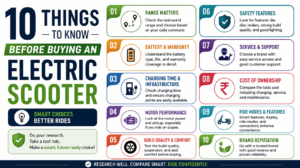
Before settling on an electric scooter for your commute, weigh up:
- Your average daily travel distance
- Charging access at home or work
- Ride comfort over longer stretches
- Storage space for a laptop or bag
- Braking performance and safety features
- Warranty terms and after-sales support
Getting these right upfront makes the difference between a scooter you tolerate and one you actually enjoy riding every day.
Who Is an Electric Scooter Really For?
Electric scooters work well for:
- Office professionals
- College and university students
- Small business owners
- Retail and healthcare staff
- Delivery riders, provided the range fits their routes
- Anyone looking to cut down daily commuting costs
Final Thoughts
For most urban commuters, electric scooters hold up well as a daily office-commute vehicle — lower running costs, home charging, smoother city riding, and less maintenance than a petrol scooter, without much of a trade-off.
If your daily distance comfortably fits within the scooter’s range and you have a reliable place to charge it, an electric scooter can make your commute quieter, cheaper, and considerably less of a chore.
Looking for an electric scooter built for daily commuting? [Explore the Buzzride range →]
FAQs
Is an electric scooter suitable for a 20–30 km daily commute? Yes — most modern electric scooters, including Buzzride models with up to 100 km range, comfortably handle daily commutes in the 10–40 km range on a single charge.
How much does it cost to charge an electric scooter at home? Charging costs a small fraction of what a comparable petrol scooter spends on fuel, since electric scooters use a standard household socket and consume relatively little power per full charge.
Do electric scooters need less maintenance than petrol scooters? Generally yes — with no engine oil, clutch, or gearbox, electric scooters need less routine servicing, mainly regular checks on tyres, brakes, lights, and battery health.



Add comment